Implementation Patterns of Self-Exclusion Tools Alongside Bonus Redemption Limits in Regulated Mobile Poker Environments Across North American Markets
Bianca Russell · Nov 8, 2026
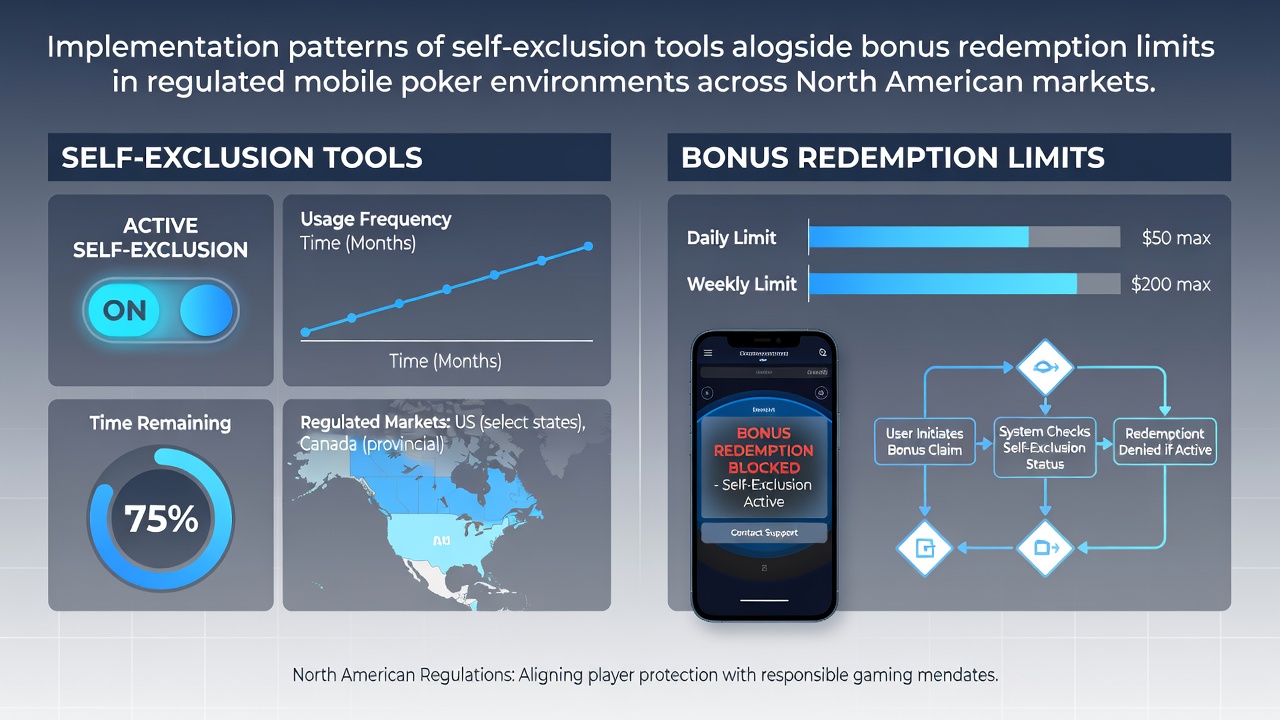
Implementation Patterns of Self-Exclusion Tools Alongside Bonus Redemption Limits in Regulated Mobile Poker Environments Across North American Markets
Regulated mobile poker platforms across North American markets integrate self-exclusion tools with bonus redemption limits through coordinated systems that track player activity in real time, and these patterns have evolved considerably by November 2026 as more jurisdictions refine their frameworks for responsible gaming compliance. Operators in states such as New Jersey, Pennsylvania, and Michigan along with Canadian provinces like Ontario and British Columbia deploy these mechanisms to align with local licensing requirements while maintaining seamless app functionality for poker sessions.
Core Implementation Structures in Mobile Poker Apps
Self-exclusion tools typically allow players to set temporary or permanent blocks through account dashboards, and bonus redemption limits cap the frequency or value of promotional offers that users can claim within defined periods, yet the two often connect via backend protocols that flag excluded accounts and prevent bonus access during those windows. Data from regulatory reports shows that integrated systems flag self-exclusion status instantly across mobile sessions, which reduces the chance of bonus-related triggers during restricted times. Observers note that this linkage appears in most licensed platforms operating under the Alcohol and Gaming Commission of Ontario, where iGaming standards require synchronized data feeds between exclusion lists and promotional engines.
Regional Variations Across North American Jurisdictions
Patterns differ by market because each regulator sets distinct timelines and verification steps, so New Jersey platforms emphasize 24-hour cooling periods before self-exclusion activates while Pennsylvania systems tie bonus caps directly to daily loss thresholds that automatically adjust when a player enters exclusion mode. In Ontario, figures reveal that over 85 percent of licensed mobile poker operators now link self-exclusion records to bonus ledgers through a centralized player database, and this approach has produced measurable drops in repeat bonus claims among restricted users according to iGaming Ontario compliance summaries. Michigan regulations require biometric confirmation for exclusion changes, and operators there combine that step with bonus eligibility checks that reset only after the exclusion period ends.
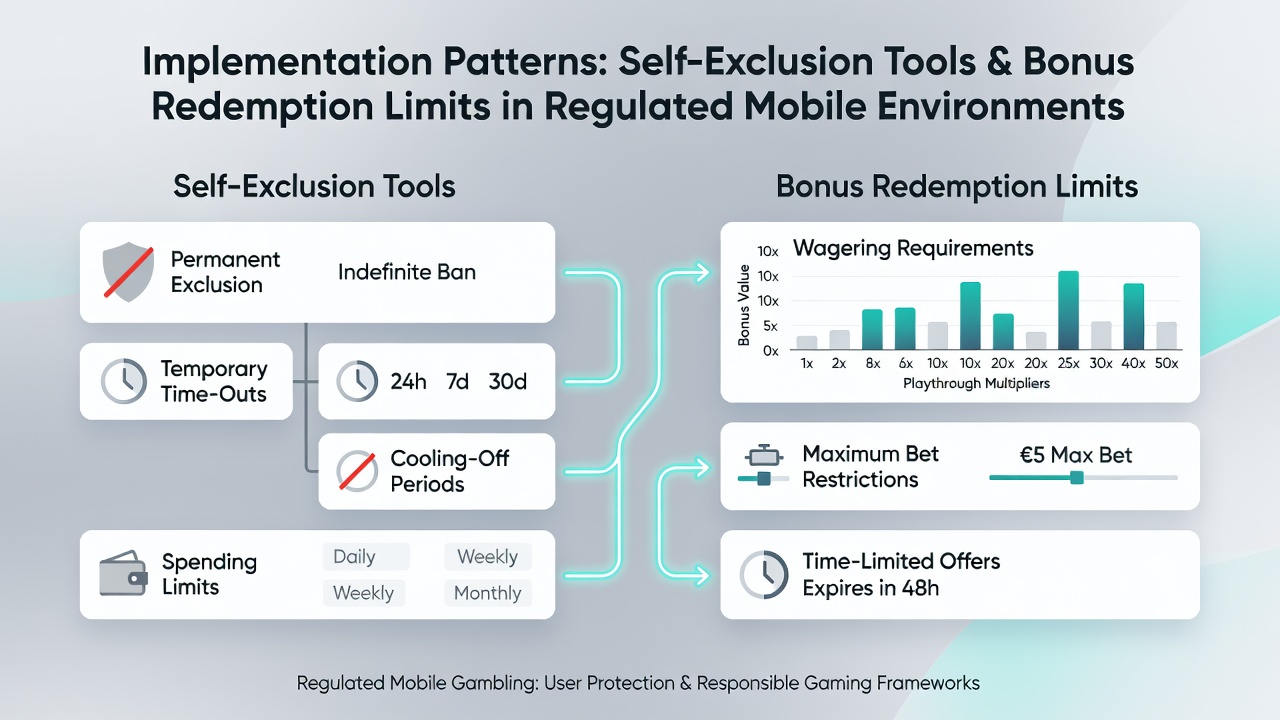
One study released in late 2025 by researchers at the University of Nevada, Las Vegas examined how these combined controls function across state lines, and the findings indicated that cross-platform data sharing through multi-state compacts helps maintain consistent exclusion enforcement even when players switch between different licensed apps. British Columbia has adopted a similar model that requires operators to apply bonus redemption ceilings based on a player's self-exclusion history from the previous twelve months, which creates layered restrictions that persist beyond the initial exclusion term.
Technical Patterns and Compliance Mechanisms
Technical implementation relies on API connections between player management modules and promotional engines, and these connections ensure that any active self-exclusion immediately suspends bonus eligibility without requiring separate manual intervention. Developers at major platforms configure these rules so that redemption attempts during exclusion periods generate automatic denials logged for regulatory audits, and the logs feed into monthly compliance reports submitted to oversight bodies. What's interesting is how some operators extend this logic to partial exclusions, where players who block only poker tables still face bonus limits on remaining game types to maintain uniform responsible gaming standards.
November 2026 brought updates in several markets as new reporting dashboards went live, and these tools let regulators monitor the correlation between self-exclusion activations and changes in bonus redemption rates across thousands of mobile accounts. Industry groups such as the American Gaming Association have documented that platforms using real-time synchronization report fewer instances of players attempting to bypass limits through multiple accounts, since identity verification layers now cross-reference exclusion databases before any bonus code activates.
Player Journey and System Interactions
Players encounter these tools at multiple touchpoints within mobile poker apps, from initial registration prompts that explain exclusion options to in-app banners that appear when bonus balances near redemption caps. When a player initiates self-exclusion, the system simultaneously reviews any pending bonus offers and either cancels them or places them in a suspended state that reactivates only after the exclusion lifts. Those who've studied these environments know that the combination reduces administrative workload for support teams because automated flags handle most interactions without additional player contact.
Case examples from Ontario operators illustrate how bonus limits adjust dynamically based on self-exclusion frequency, wth players who have used exclusion tools more than twice in a calendar year facing reduced maximum redemption values on subsequent bonuses. Similar adjustments appear in Pennsylvania, where regulators require that any player returning from exclusion must complete a mandatory responsible gaming quiz before bonus eligibility resumes, and this step integrates directly with the redemption engine to enforce the sequence.
Conclusion
Implementation patterns continue to mature as North American regulators refine data-sharing requirements and operators optimize backend connections between self-exclusion records and bonus systems in mobile poker environments. The coordinated approach supports compliance across jurisdictions while preserving the core functionality that players expect from regulated apps, and ongoing adjustments in November 2026 reflect broader efforts to align technical controls with evolving regulatory expectations.